

Echo ultrasound courses
- Go from crashing vitals to a clear diagnosis with a 2-minute bedside echo.
- Monitor haemodynamics with more than a blood pressure cuff.
- See what the monitor can’t : Real-time cardiac function behind the drape.
- Is it heart failure or COPD? Ditch the stethoscope for a transducer.
- Don’t just read the report. Build hands-on skills to capture diagnostic images.
Precision is your shortcut to clinical certainty. At Zedu, we bypass the academic fluff to focus on the high-yield scanning skills clinicians actually need at the bedside. Whether you are an emergency physician differentiating shock, an intensivist monitoring unstable patients who can’t travel, or an anaesthetist ensuring a heart can withstand the stress of surgery, we provide the practical tools for the job. From hospitalists distinguishing heart failure from COPD to cardiology fellows seeking a head start in technical imaging, we streamline the path from probe to diagnosis—giving you the clinical edge and confidence to manage complex cases in real-time.

Our expert-led courses prioritize maximum hands-on time with live models—not simulators—so you can build the muscle memory and scanning precision required for definitive decision-making. By focusing on the practical “how-to” of capturing clear images on every patient, we ensure you spend less time searching for the view and more time focused on the intervention when the pressure is on.
Find a course, set a date and register now
Unlock a structured step-by-step approach to anaesthetic ultrasound that boosts your diagnostic confidence.
Hands-on courses
Move beyond the basics and build your confidence to perform and interpret cardiac ultrasound. Master your spatial reasoning skills to get the best image possible for diagnosis.
Select your date and enter your details to start your journey with us – we can’t wait to meet you.
$3,820.00
At the completion of this course you will have developed a systematic approach to conduct cardiac ultrasound assessment of a shocked or arrested patient, and the ability to use ultrasound to assess the patient’s fluid status.
$1,380.00
Scanning practice & Coaching
Zedu coaching and scanning practice options lead you to independent and safe practice sooner. If you need to know that you’re scanning properly and doing it right or want to be the local go to expert in your department, Zedu tailored days help you be the difference for your patients.
Online courses
This online module is perfect for getting started. Through a combination of focused video explanations and guided interactive activities you will be able to:
- Navigate your way around your system and its primary functions
- Set up for an ultrasound exam
- and much more!
$1,380.00
For new learners of ultrasound, this online module is perfect for getting started. Through a combination of focused video explanations and guided interactive activities you will be able to:
- Navigate your way around your system and its primary functions
- Set up for an ultrasound exam
- and much more!
$149.00
Zedu Ultrasound courses are recognised by:



Proudly supported by


Why is learning ultrasound so important for emergency and intensive care physicians, anaesthetists and internal medicine specialists?
In the high-stakes environments of emergency medicine and critical care, the ability to rapidly diagnose life-threatening conditions is the difference between recovery and decline. For these healthcare professionals, cardiac ultrasound has evolved from a specialized imaging modality into an essential extension of the physical exam. By integrating focused cardiac ultrasound into their daily workflow, clinicians can achieve immediate clinical decision making at the bedside, bypassing the delays of formal radiology. Whether it is an emergency physician identifying a massive pulmonary embolism or an intensivist using critical care echo to manage complex shock, the transition from uncertainty to a clear treatment plan happens in minutes, improving patient outcomes when every second counts.
For anaesthetists and internal medicine specialists, mastering basic echocardiography provides a window into physiology that a stethoscope simply cannot offer. In the perioperative suite, focused echocardiography allows for real-time assessment of how a patient’s heart responds to the stress of surgery and fluid shifts. Meanwhile, on the general medical wards, point of care ultrasound enables physicians to accurately differentiate between complex pathology, such as heart failure and acute respiratory distress. By utilizing transthoracic echocardiography to visualize cardiac function directly, these specialists can refine their clinical practice and tailor interventions with a level of precision that traditional assessment methods lack.
To bridge the gap between theory and the bedside, a dedicated echo course is vital for developing the necessary practical skills. Mastering the nuances of image acquisition and probe orientation requires structured, hands-on training that focuses on high-yield views rather than just academic theory. By investing in these technical competencies, doctors across all acute specialties empower themselves to provide safer, faster, and more effective care, ensuring they are ready to act with total confidence when the pressure is on.


Skills development
Every ultrasound user must establish the ultrasound skills fundamental to acquiring an image – from turning a system on and optimising the system setup, to patient positioning and ergonomics. We’ll give you the foundations for independent practice.

Scanning Skills
To get the most out of your efforts and before picking up a probe it’s important to identify your objective – do you have a purpose for scanning? Scanning for scanning’s sake isn’t optimal. When learning you need to engage in deliberate practice to develop your ultrasound skills. When applied clinically, you need to have the ability to define your needs, identify limitations and make decisions. We’ll help you focus on where you’re going and what you want to achieve.

Learning Pathway
Attending a course is one thing – making the time to develop your ultrasound skills and abilities is another. Learning ultrasound is a lifelong commitment – trust us, we know. Commit to invest your time before you start. Take time to remove practice barriers. Focus your time. Track your progress. Spend time developing skills out of the clinic. We’ll work with you to identify a pathway for skills development in your context.

Support
When you get back to the workplace, what’s next? Early enthusiasm to use ultrasound can soon fade to frustration when you return to the workplace, where the reality of clinical demands and often lack of ultrasound users can undermine your confidence. We can help by providing ongoing support, training and credentialing – as well as ongoing information through our free coaching corner and social media posts. We’re there for you.
How do Zedu’s cardiac ultrasound courses work?

Zedu’s accredited ultrasound training courses follow a proven step-by-step program to address the specific challenges faced by emergency medicine specialists. intensivists, anaesthetists and general physicians. Our boutique approach ensures personalised training. Our courses cover everything from the four basic views to rapid b-mode assessment of the heart, providing a deep understanding and hands-on proficiency in using ultrasound as a diagnostic tool. Learn with your peers in small groups.
Each course employs a systematic approach to help you understand the principles, develop scanning skills and implement strategies that have worked for thousands of clinicians in Australia, New Zealand and around the world.
Hands-On Training with Real-Life Patient Models
We prioritise practical learning through extensive, supervised, hands-on scanning sessions tailored to focused cardiac ultrasound. You’ll gain experience scanning real people (not simulators) to understand the variability of imaging in a diverse population. Our live patient models represent a wide range of body types and ages, preparing you to confidently manage diverse patient populations. Our clinical training emphasises pattern recognition, a systematic approach to ultrasound assessment and troubleshooting techniques, all crucial for cardiac ultrasound.
Experienced Instructors Committed to Your Success
Our team of experienced sonographers and sonologists, are dedicated to providing you with personalised instruction and feedback. With a passion for teaching and a deep understanding of ultrasound imaging, our instructors will guide you through each step of your ultrasound training journey, ensuring you build both confidence and competence.

Deliberate Practice for Mastery
At Zedu, we believe in the power of deliberate practice. Our training programs are designed to foster ultrasound skills development through specific goals, focused attention, constructive feedback, and repetitive practice. This structured approach ensures you develop the muscle memory and analytical skills necessary for proficiency and confidence in ultrasound.
Zedu is driven by seven key values

Relevance
Focusing on clinical practice to deliver immediate benefit to clinicians and patients

FUN
Learning should always be fun, engaging and entertaining

QUALITY
Providing real patients, small groups and skilled educators for best practice education

IMPACT
Create a ripple effect – making a difference for clinicians so they can make a difference for their patients

INNOVATION
Creative teaching methods to inspire better results

COLLABORATION
Making friends and breaking silos is what we’re about; the future of medicine lies in collaboration

SAFE LEARNING ENVIRONMENT
No question’s too big, too small, or too silly – no judgements here
FAQs
From one to twelve, and everything in between. As a rule we exceed the minimum requirements, ensuring that there is an industry leading ratio of 1 sonographer educator or physician to every 4 course participants. This is important as it ensures that you get more hands-on time all the time.
The better question to ask is what machines don’t you have! Most of the major players in the ultrasound world support us with their latest systems, making sure you get access to the best and newest technology available. We have so many systems here – from high end carts to handhelds – that in most cases there is a one-to-one ratio.
Zedu courses are designed for your specialty. With quality education always at our front of mind, you’ll be learning with a group of your peers from start to finish. This ensures you are getting a no compromise sequential and structured education experience, all the while having the security and safety of learning with your peers. Your learning experience is not compromised by people joining at different stages and at different levels – you’ll be on board with the same team from beginning to end.
Would you only go to part of a movie? Our courses are designed to be attended as a whole, structured in a sequential way to make sure you develop and extend your ultrasound repertoire. Besides – if gaining your credentials is an important part of your motivation to come along, the bodies that accredit our courses wouldn’t look too kindly on you skipping class.
Absolutely not. Our courses are designed for obstetricians and gynaecologists at any stage of their career, with any level of ultrasound experience. Our experienced sonographer educators will adapt their teaching to meet you at your level – no stress.
In short – no – as this is determined by your progress through your college fellowship pathway.
Yes indeed. Make sure you bring your chargers and accessories too.
The courses are run at the Zedu Learning HQ:
8-10 Flintoff Street, Greensborough VIC 3088, Australia
When you register you’ll get information on our location and transport options delivered to your email inbox too.
Yes we do – we love to tour and share ultrasound around the world. If you’d like to discuss what options you have to get us to deliver training at your place please get in touch.
That’s precisely what we do. Our courses are designed for you to get your hands on a probe so you can take home practical skills. All courses have a ratio of at least 2/3 practical, 1/3 didactic – you won’t be disappointed.
No – but there is a very affordable options only a three-minute walk from our front door. You can find more information here…
Yes – we love teaching one-on-one as it delivers optimal results over a short time-period. Get in touch.
Yes there is – but it’s not too onerous. We recommend you at least revise your physics by watching the short videos before you arrive – the other material you can review as you go, or afterwards.
Use the login details you created at registration.
The vast majority of Zedu ultrasound courses carry accreditation or are recognised by one or more bodies, including:
- The Australasian College for Emergency Medicine (ASUM)
- The Australian College of Midwives (ACM)
- The Australian College of Rural & Remote Medicine (ACRRM)
- The Australian and New Zealand College of Anaesthetists (ANZCA)
- The Australasian Society of Ultrasound in Medicine (ASUM)
- The College of Intensive Care medicine of Australia and New Zealand (CICM)
- The Point-of-Care Ultrasound Certification Academy
- The Royal Australian College of General Practitioners (RACGP)
- The Royal Australasian College of Physicians (RACP)
- The Royal Australasian College of Surgeons (RACS)
- The Royal Australian and New Zealand College of Obstetricians and Gynaecologists (RANZCOG)
- The Thoracic Society of Australia and New Zealand (TSANZ)
No – we are famous for our catering – rest assured you will be well fed and watered.
Resources
How to: B-Mode Ultrasound & Imaging the Heart
In this month’s Coaching Corner, Suean discusses how you can optimise your B-Mode images of the heart. Without mastering these basics, your ultrasound images will be suboptimal and advancing your cardiac ultrasound examination skills delayed. With tips and tricks, cases and learning pearls there is something for anyone aspiring to improve their cardiac skills. And as always this is followed up by a live Q&A.
How to: Rapid Ultrasound for Shock and Hypotension – the RUSH Exam
In this edition of the POCUS #coachingcorner…
Suean examines the RUSH exam – starting with history and context, working through how to optimise your approach to imaging the pump, tank and pipes and finishing with a great group discussion and Q&A.
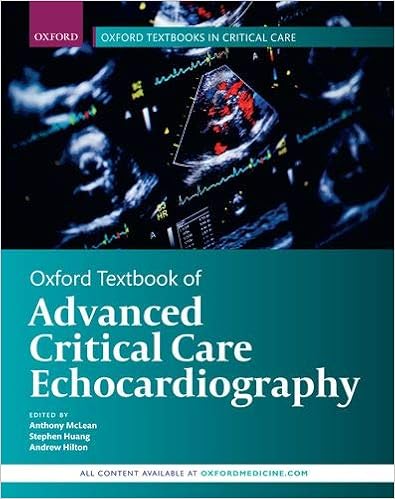
Oxford Textbook of Advanced Critical Care Echocardiography
For critical care practitioners wishing to master advanced critical care echocardiography, it is necessary to master the theoretical aspects. The Oxford Textbook of Advanced Critical Care Echocardiography provides a physiological and evidence-based reference guide to the principles and techniques of advanced echocardiography.
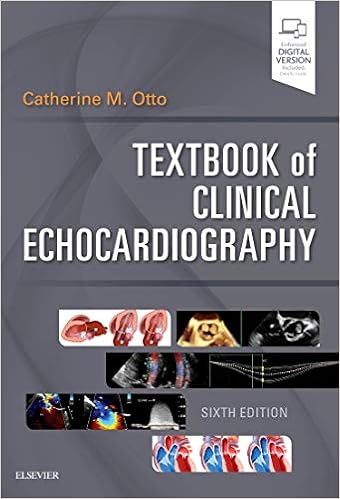
Textbook of Clinical Echocardiography
Today’s echocardiography continues to be a low-cost, minimal-risk procedure with the potential to yield a vast amount of detailed, precise anatomic and physiologic information. Dr. Catherine Otto’s Textbook of Clinical Echocardiography, 6th Edition, clearly outlines how to master the core principles of echocardiographic imaging in order to make an initial diagnosis and integrate this data in clinical decision making for patients with a wide range of cardiovascular diseases. Ideal for cardiology fellows, medicine residents, and cardiac sonography students, this bestselling text teaches all the essential elements of ultrasound physics, tomographic and 3D anatomy, image acquisition, advanced imaging modalities, and application in specific disease categories– all with a practical, problem-based approach.
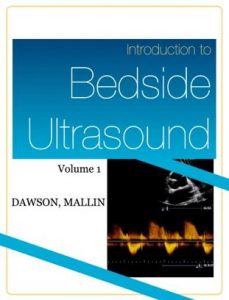
Introduction to Bedside Ultrasound – part 1 [iBook]
Introduction to Bedside Ultrasound seeks to teach bedside ultrasound to students in a more efficient, directed format than previous texts. It accomplishes this with a plethora of multimedia adjuncts. Instead of simply reading about ultrasound pathology and protocols, the reader can watch actual videos and demonstrations of the pathology from directly within the book while reading. This experience is closer to bedside learning with a true expert than reading a traditional textbook.
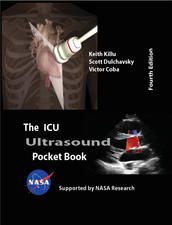
The ICU Ultrasound Pocket Book [iBook]
The ICU Ultrasound pocket book is a concise, targeted reference source to enable the novice or advanced emergency or ICU clinician to incorporate point of care ultrasound into their practice. This book effectively teams internationally recognized sonologists with NASA researchers developing just in time ultrasound training methods for astronauts on the International Space Station, to provide a rapid ultrasound diagnostic and procedural guide for the ICU. The comprehensive sections included in this book cover the ever expanding array of clinical indications for non-radiologist
Testimonials

It was an engaging learning environment. Different models with time limit for each doctor is nice for learning. Thank you to the faculty for great work.
Eduard N
Concise, informative and like the amount of hands-on opportunities provided.
Sashi K
I find many CPD activities I just do for the CPD points and they don't really actually make any difference to my practice. I think this course has made a huge difference to my confidence. I should have done the course 3 years ago! Know exactly what the screen is showing you BEFORE I put the needle in!
David K
Very much appreciated the comprehensive & anatomical approach that Myra taught. Feel much more confident & capable to do a useful variety of blocks.
Yvonne W
Very engaging course with lots of hands on practice. Even put a Fascia iliaca nerve block with great results in a Pt.
Seema N
Very relevant information in the perfect amount of depth. All in line with the current teaching that I have been getting elsewhere. All topics were extremely relevant to my current job and future aspirations. Amazing facilitators!! Some of the best teachers ive had in a very long time. So approachable yet insanely knowledgeable. I felt like I could ask anything and they would have a solution. I think starting from the absolute basics at the start really gave a fantastic foundation but also allowed me to feel safe in my limited prior knowledge and with asking questions.
Alyssia D
This was better than I ever imagined. Facilitators were the best ever, course structure and content was spot on, location and facilities (especially lunch and snacks) were amazing, machines were high quality and engaging with real patients was invaluable.
Sarah H
Very clinically focused and relevant to my area of practice. The short theory sessions combined with regular short practical sessions was an engaging way to learn and helped build on the skills we were learning bit by bit. The presenters were very knowledgeable and all clearly very experienced at ultrasound. They all had different tips and pieces of advice, which I found very valuable.
Carine M
It was awesome, thanks so much for making the course hands on, exciting and very visual. You have done an amazing job with facilitating and everything that was provided.
Angela S
Covered everything was hoping to learn. Great presenters and facilitators, very relaxed but knowledgeable, very patient and reassuring.


